
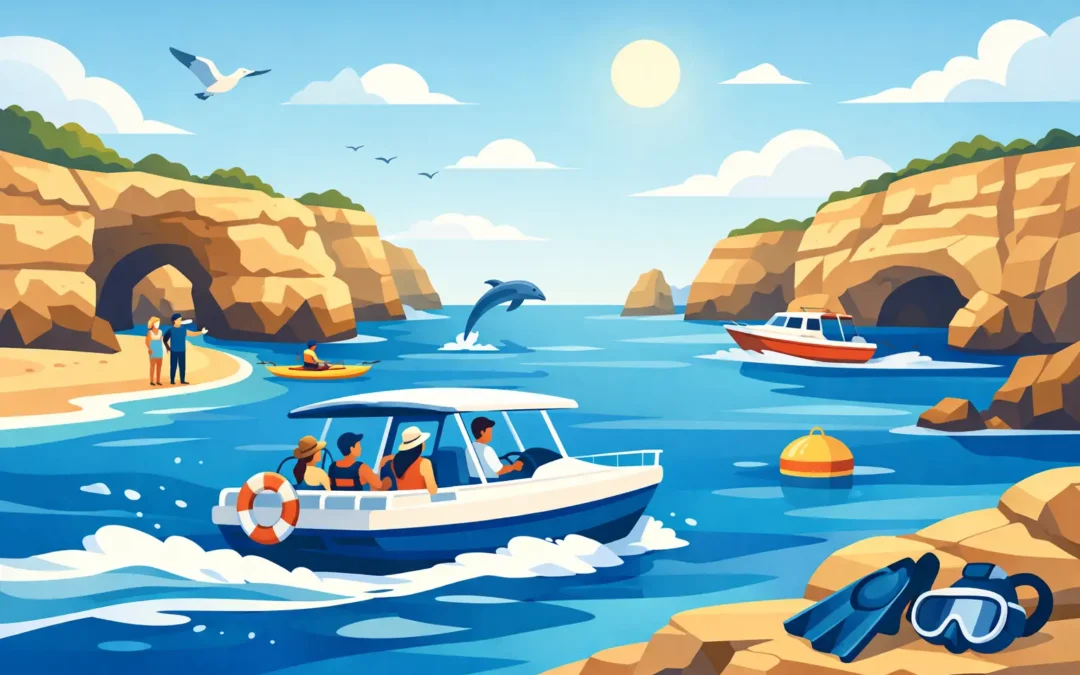
The first glimpse of the golden cliffs near Benagil is the kind of holiday moment people remember for years. But before stepping aboard, it is reasonable to ask: are Algarve boat tours safe? With a professional, licensed operator, appropriate conditions and a little sensible preparation, they are a safe and enjoyable way for families, couples and groups to experience the coast from its best angle.
The Algarve is a working marine environment, not a theme park. Sea conditions can change, cave entrances are affected by swell, and no responsible skipper should promise to enter every cave on every day. That careful decision-making is exactly what makes a well-run trip reassuring.
Are Algarve boat tours safe with a professional operator?
Safety begins long before the boat leaves Vilamoura Marina. Reputable operators use vessels designed and maintained for coastal tourism, carry required safety equipment, and employ licensed skippers who know the local coastline, tides and weather patterns. Their job is not simply to get close to the famous sights. It is to judge the conditions continuously and choose the safest, most comfortable route for everyone on board.
A good crew gives a clear briefing before departure. You should be shown where to sit, how to move around the boat safely, where life jackets are kept and what to do if the sea becomes choppier than expected. Listen closely, even if you have been on boats before. A fast sightseeing boat handles differently from a ferry or a private yacht, particularly when travelling past exposed headlands.
Modern seating also matters more than many travellers realise. Individual, secure seats give passengers a more stable and comfortable position than standing in a crowded space. Smaller groups make it easier for the skipper and crew to communicate, notice if someone needs help, and create a more relaxed experience from the marina to the breathtaking caves.
Weather and sea conditions decide the day
The biggest variable on an Algarve boat tour is the sea. Sunshine alone does not guarantee calm water. Wind direction, wave height, swell and tides all affect whether a coastal route or cave visit is suitable.
Responsible skippers check marine forecasts before departure and continue assessing conditions while at sea. If the water is too rough to enter Benagil Cave or another narrow grotto safely, the skipper may view it from outside, alter the route or cancel the trip. That can feel disappointing when Benagil is high on your holiday wish list, but it is a sign of professional operation, not poor service.
The same applies to dolphin watching. Dolphins are wild animals, so sightings can never be guaranteed, even in an area with consistently strong sighting records. Experienced local crews know the waters where dolphins are often seen and approach them carefully, but the animals set the terms. A respectful encounter at a suitable distance is far better than chasing wildlife for a photograph.
Benagil Cave safety: what changes on the water
Benagil Cave is world-famous for its circular skylight, sandy interior and dramatic rock walls. It is also a natural sea cave with a narrow entrance, which means access depends entirely on conditions at that moment.
A trained skipper will slow down near the entrance, assess the movement of the water and decide whether it is safe to enter. Boats should never force their way through a busy or rough cave opening. During periods of high swell, a tour may still show you the spectacular cave from the water outside, along with beaches, arches and hidden coves along the coastline.
Passengers also have a role to play. Stay seated when instructed, keep hands and arms inside the boat, and avoid standing up for photos while the vessel is moving. The best images are never worth losing balance for. Your crew will normally point out the best moments to take photographs safely.
What should families know before booking?
Boat tours are a brilliant choice for many families, especially children who love the excitement of spotting dolphins or seeing caves from the water. The right trip depends on your child’s age, confidence around boats and the day’s conditions.
For younger children, choose a tour with proper individual seating and a crew experienced in welcoming families. Bring layers even in summer, as the breeze offshore can feel cooler than it does around the pool. A light waterproof jacket is useful in spring or autumn, and sun cream, hats and drinking water are essentials on bright days.
If a child is prone to motion sickness, consider a shorter coastal trip or speak to a pharmacist before travelling about suitable remedies. It is also worth choosing a morning departure when the sea may be calmer, although conditions can vary at any time. Tell the crew if someone in your party is nervous, pregnant, has reduced mobility or has a health concern that could affect their comfort on the water. They can advise honestly on whether a particular experience is suitable.
How to choose a safer Algarve boat tour
Do not book solely because a tour appears to be the cheapest or promises the most stops. Look for clear practical information: a recognised marina departure point, licensed local skippers, safety briefings, vessel details and transparent policies for weather-related changes. Recent guest reviews can also reveal whether people felt looked after, informed and comfortable during their trip.
Ask about group size and seating. A boat packed to capacity may be suitable for some travellers, but it can feel less comfortable for families, first-time boat passengers or anyone wanting more personal attention. Private charters offer extra flexibility for multigenerational groups, special occasions and travellers who would prefer to set a gentler pace, though they naturally cost more than shared tours.
For a polished experience departing directly from Vilamoura Marina, Algarve Cave Tours pairs experienced local skippers with comfortable boats and a choice of shared and private coastal adventures. The key is to select the trip that matches your group, rather than trying to fit every Algarve highlight into one rushed outing.
A few simple habits make a real difference
Arrive early enough to use the loo, collect any needed medication and settle in without rushing. Wear secure footwear rather than loose flip-flops, particularly if you may need to step between the pontoon and boat. Keep mobile phones and cameras secure with a strap or waterproof pouch, and bring only what you need.
Once on board, follow the skipper’s instructions promptly. They may ask passengers to remain seated, redistribute weight, or avoid a particular side of the boat while manoeuvring. These requests are routine and help the vessel travel smoothly. If you are unsure about anything, ask the crew. Friendly, professional teams would always rather answer a quick question than have a passenger feel uncertain.
Avoid arriving dehydrated or after a heavy lunch and too much alcohol. The sea air can be wonderfully invigorating, but it can also intensify fatigue or queasiness. A light meal, water and sensible sun protection will help you enjoy every minute.
When it may be better to choose another day
Some travellers should be especially cautious in rough conditions, including those with severe motion sickness, recent injuries, certain medical conditions or very young children who are uneasy on boats. A reputable operator will not pressure you to travel if the forecast is unsuitable for your group.
If the weather causes a cancellation or route change, use the extra time to enjoy Vilamoura or rearrange your sea trip for another day. The Algarve coastline is spectacular in many conditions, but the calm, confident feeling of travelling with a crew who puts safety first is part of what makes the experience so special.
Book a trip that leaves room for nature to lead the day, listen to your skipper, and you can look forward to the caves, cliffs and possible dolphin encounters with the excitement they deserve.