
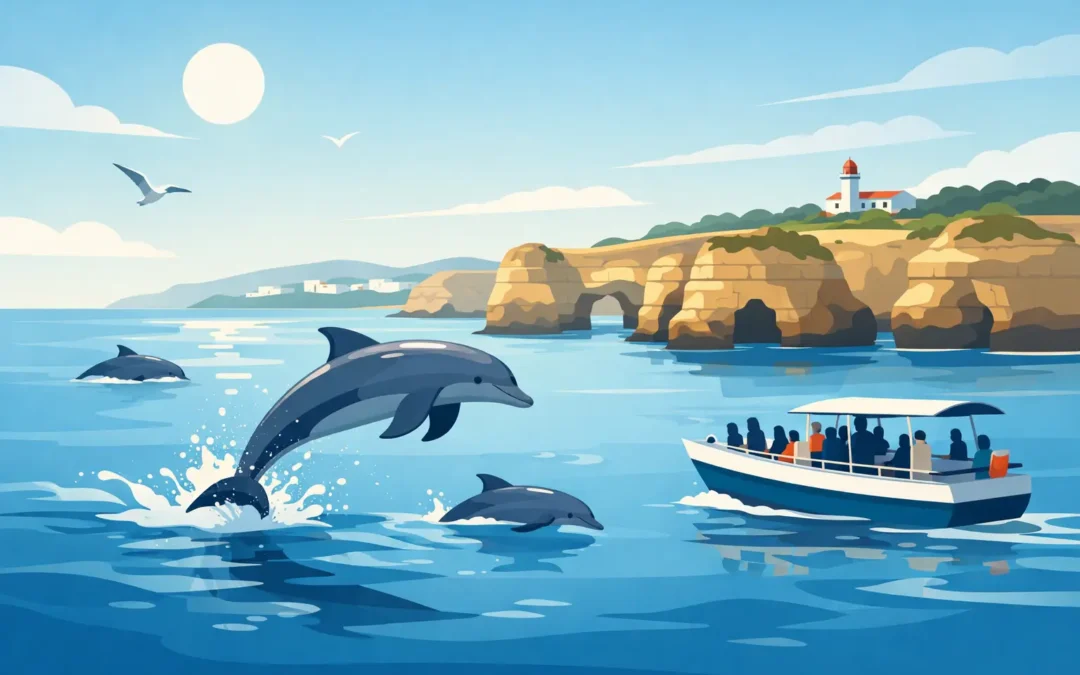
The first sign is often a flash of silver-grey beside the boat, followed by a fin cutting through the Atlantic and an excited call from the crew. So, are dolphins easy to spot in the Algarve? They can be, particularly on a purpose-built dolphin watching trip with an experienced local skipper, but they are wild animals and no responsible operator can guarantee a sighting every time.
The Algarve’s open waters are home to several dolphin species, and encounters can feel wonderfully close and completely out of this world. A little understanding of the conditions, timing and nature of wildlife watching will help you choose the right trip and set off with the best possible expectations.
Are dolphins easy to spot from a boat?
From the shore, dolphins are difficult to spot. They may surface only briefly, often far beyond the break, and their dorsal fins can disappear into glare, waves or passing boat traffic. From a boat travelling offshore, the picture changes considerably.
A licensed skipper who knows the local waters is looking for more than an obvious leap. They watch the horizon for repeated splashes, birds gathering over feeding fish, changes in the water and the distinct rhythm of a pod surfacing together. This local knowledge matters. Dolphins do not follow a timetable, but experienced crews understand where conditions and feeding activity can make an encounter more likely.
The advantage of a dedicated dolphin safari is time and focus. Rather than simply passing along the coast on the way to a cave, the crew can search the areas where dolphins are regularly encountered and adjust the route to the sea conditions on the day. It is a far better prospect than hoping to catch a glimpse from a beach towel.
Why the Algarve is a strong place for dolphin watching
The waters off Vilamoura and the central Algarve provide access to the Atlantic, where dolphins travel, feed and socialise in open sea. Common dolphins and bottlenose dolphins are among the species visitors may see, sometimes travelling in small groups and sometimes in large, energetic pods.
Common dolphins are often recognised by their striking hourglass-style colouring and lively movement. Bottlenose dolphins tend to look larger and more solid, with a curved dorsal fin and a calmer, powerful way of moving through the water. You do not need to identify every species to enjoy the experience, of course. Seeing a pod ride the bow wave or surface alongside the boat is a holiday moment that needs no label.
What makes the Algarve particularly appealing is the combination of wildlife and scenery. A trip departing from Vilamoura Marina can pair the possibility of dolphins in the open Atlantic with the breathtaking limestone coastline, secluded beaches and the world-famous Benagil Cave. On the right day, guests can enjoy two of the region’s most memorable experiences in one comfortable outing.
The best time to see dolphins in the Algarve
Dolphins can be encountered throughout the year, because they are not a short-lived seasonal attraction. That said, the best time for your individual trip depends less on a specific month and more on the weather and sea state.
Calmer water makes dolphins easier to see. When the sea surface is relatively smooth, the crew can spot fins and movement at greater distances, while guests have a clearer view once a pod is found. On choppier days, dolphins may still be present, but waves can conceal quick surfacing animals and the journey can feel more adventurous.
Morning trips are often popular because the air can be cooler and the light softer, especially during the height of summer. Later departures can also be excellent, and an afternoon on the water brings a warmer glow over the cliffs. There is no magic hour that guarantees dolphins. The most useful approach is to select a day with favourable marine conditions and allow the skipper to make the best call on the route.
If dolphins are high on your Algarve wish list, avoid leaving the trip until your final day. Booking earlier in your holiday gives you flexibility if weather conditions require a change of plan. It also means you can relax and enjoy the rest of your stay knowing you have already had your moment at sea.
What a real dolphin encounter looks like
Wild dolphin watching is exciting precisely because it is unscripted. A pod may appear at a distance first, with a few fins breaking the surface in a line. As the boat approaches respectfully, the dolphins may keep their distance, cross the vessel’s path or choose to travel alongside it for several unforgettable minutes.
Some days bring spectacular behaviour: dolphins racing through the bow wake, youngsters leaping clear of the water, or dozens of animals surfacing across a wide stretch of sea. Other encounters are quieter. You may watch a smaller pod feeding or moving steadily through the water before it continues on its way.
Both are genuine wildlife experiences. The crew should never chase, crowd or force an interaction. Respectful observation protects the animals and makes the sighting more meaningful for everyone on board. It also keeps the experience family-friendly, safe and enjoyable rather than turning it into a race across the water.
How to give yourself the best chance of a sighting
Choose a trip designed to look for dolphins, rather than assuming every coastal boat journey will find them. A boat with an experienced skipper, professional safety standards and good visibility from individual seating gives you a more comfortable place to watch the horizon.
It helps to arrive ready for open water. Bring sunglasses to cut surface glare, even on a bright but breezy day, and keep your camera or mobile phone easy to reach. If you are prone to seasickness, take sensible precautions before departure rather than waiting until the boat is moving. The crew can advise on what to expect, but preparation lets you focus on the coastline and the wildlife.
Families should choose a tour length that suits their children. Younger guests are often thrilled by dolphins, especially when a pod comes close, but they will enjoy the trip more if they are warm, comfortable and able to listen to the crew. A light jacket is worthwhile outside the hottest part of the day, as it can feel cooler offshore than it does around the marina.
Finally, listen when the skipper asks guests to look in a particular direction. Dolphins often surface several times in a predictable travel line, so the first glimpse may be only the beginning. Put the camera down occasionally as well. A photograph is a lovely souvenir, but watching dolphins with your own eyes is usually the part people remember most.
Dolphin watching and Benagil Cave on the same trip
For holidaymakers with limited time, a combined dolphin and cave tour is an excellent way to see more of the Algarve from the water. The coastal route towards Benagil reveals rock arches, dramatic cliffs and beaches that are difficult to appreciate from land. Then, beyond the coastline, the search for dolphins adds the possibility of a completely different kind of Algarve highlight.
There is a trade-off to understand. Sea conditions, wildlife activity and the day’s operational route influence how much time can be spent in each area. A dedicated dolphin trip places the strongest emphasis on searching offshore, while a combined experience balances dolphin watching with the coastal landmarks. Neither is automatically better – it depends on whether your priority is maximising wildlife-search time or fitting Benagil into the same adventure.
At Algarve Cave Tours, knowledgeable local skippers make that balance feel straightforward. They share the coastline with confidence, prioritise safe navigation and use their experience to make the most of the conditions rather than following a rigid script.
Set off with realistic expectations and room for wonder
Dolphins are not easy to spot in the way a landmark is easy to find. They are free, fast-moving animals in a vast Atlantic setting, which is exactly why the first sight of a pod feels so special. Choose a well-run trip, leave a little flexibility in your holiday plans, and let the sea provide the surprise.