
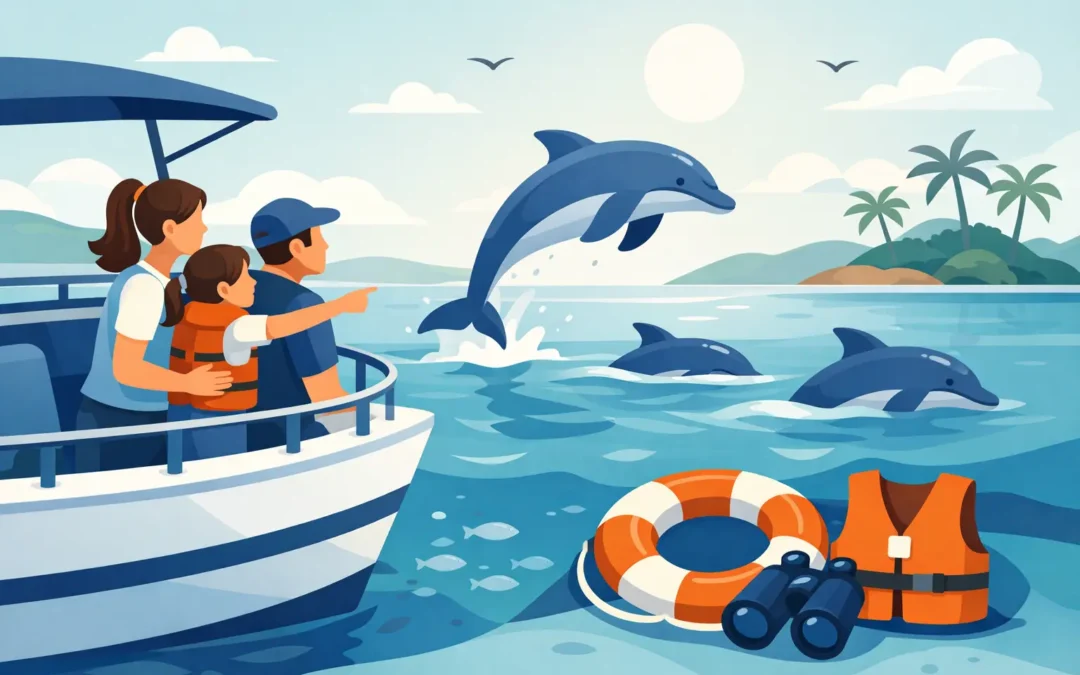
The moment dolphins surface beside the boat can become the story your children repeat for the rest of the holiday. But parents are right to ask, are dolphin tours safe for children? On a well-run trip, with suitable weather, an appropriate boat and a crew that takes its responsibilities seriously, dolphin watching can be a brilliant family experience. The key is choosing carefully rather than booking the first available departure.
A boat trip is never entirely risk-free, particularly on the open Atlantic. Sea state can change, wildlife sightings cannot be promised, and a fast ride may not suit every child. A professional operator manages those realities through good judgement, clear safety procedures and the confidence to alter or cancel a trip when conditions are not right.
Are dolphin tours safe for children in the Algarve?
Generally, yes – provided the tour is designed and operated with families in mind. The Algarve is a popular place for boat-based wildlife experiences because its coastline is spectacular, its marinas are well equipped and experienced local skippers know the conditions. Yet “family-friendly” should mean more than simply allowing children onboard.
Look for a licensed operator with a professional crew, maintained vessels and clearly explained safety arrangements. Children should have a properly fitting lifejacket, adults should be able to remain seated comfortably, and the skipper should give a briefing before departure. On quality tours, the crew will explain where to sit, how to move around the boat safely and what to do if the sea becomes choppier.
The right boat matters too. A modern sightseeing boat with individual seating gives families more stability and personal space than a crowded vessel where passengers are standing or shifting about. It also makes it easier for parents to keep younger children close during the journey.
Safety is not only about equipment. It is about decision-making. A responsible skipper monitors the forecast, wind direction, swell and conditions outside the marina before leaving. If the sea is unsuitable for the planned route, the crew may adjust the itinerary, postpone the experience or cancel it. That can be frustrating when you have planned a special holiday day, but it is a reassuring sign that safety comes before the schedule.
What makes a dolphin trip suitable for your family?
A child’s age, confidence around water and comfort with movement all make a difference. There is no single age at which every child is ready for a dolphin tour. An adventurous eight-year-old who is happy on boats may love an offshore safari, while a cautious teenager who gets travel sick may find the same trip difficult.
Before booking, check the operator’s minimum-age policy and ask about the route, expected duration and type of vessel. Some trips combine dolphin watching with the world-famous Benagil Cave and the breathtaking Algarve coast, which means more time at sea and a bigger adventure. For many families, that is exactly what makes the trip memorable. For very young children, however, a shorter coastal outing may be the more comfortable choice.
Think about the time of day as well. Morning departures can often feel calmer and cooler, particularly in summer, although conditions vary daily. Avoid planning a long boat trip immediately after a large breakfast, and give children time to use the loo before boarding. There may not be facilities available once the boat is underway.
If your child has a history of motion sickness, do not assume excitement will cancel it out. Speak to a pharmacist before your holiday about age-appropriate options, follow the product guidance carefully and bring water and a light snack if permitted. Sitting towards the centre or rear of the boat, focusing on the horizon and staying in the fresh air can help. The crew can usually suggest the steadiest available seats, but they cannot remove the movement of the sea.
The safety checks worth making before you book
A glossy photograph of dolphins is not enough. Give yourself a few minutes to check the practical details, especially if you are travelling with younger children. A reputable operator should be happy to answer straightforward questions about its boats and procedures.
Check that lifejackets are provided in child sizes and that the crew explains how they are used. Ask whether there is a pre-departure safety briefing, whether seating is allocated or individual, and what happens if weather conditions change. It is also sensible to confirm the meeting point and boarding process. A rushed run along the marina with a tired toddler is not the ideal start to an ocean adventure.
Read recent guest feedback with a parent’s eye. Comments about calm, knowledgeable crew, clean boats, clear instructions and thoughtful help when boarding reveal more than generic five-star praise. A strong reputation is useful, but it should sit alongside the basics: proper licensing, local operational experience and a willingness to be transparent about conditions.
At Algarve Cave Tours, trips depart from Vilamoura Marina with experienced licensed skippers, modern boats and individual seating designed for a more comfortable coastal experience. Families still need to choose the trip that suits them, but those details can make a real difference between simply getting through a boat ride and enjoying every minute of it.
Safe dolphin watching also protects the dolphins
Children often arrive hoping to touch a dolphin or see one leap right next to the boat. It is a lovely kind of excitement, and it is also a chance to set the right expectation. Dolphins are wild animals, not performers. The most rewarding sighting is one that happens on their terms.
Responsible crews keep a respectful distance, avoid chasing or surrounding a pod, and approach slowly. They will not feed dolphins, encourage swimming with them or make sudden manoeuvres just to create a closer photograph. This approach is safer for passengers and kinder to the animals.
It can also make the encounter more meaningful. When dolphins choose to bow-ride, surface nearby or travel alongside the boat, children see genuine behaviour in a wild setting. A good guide will point out what is happening, explain why the boat remains at a distance and help turn a thrilling moment into one with real respect for the sea.
Sightings are never guaranteed, even in areas with a high success rate. Explain that before the trip, particularly to younger children. Frame the day as an adventure along the coast, with sea caves, cliffs and the chance of dolphins rather than a promise of dolphins. That small conversation protects against disappointment and leaves room for wonder.
How parents can keep children comfortable onboard
Your preparation matters as much as the operator’s. Dress children in layers, even on a hot Algarve afternoon. It can feel significantly cooler on the water, particularly when the boat is travelling at speed. A windproof top, secure footwear, sun cream and a hat that will not blow away are sensible choices.
Keep hands, arms and mobile phones inside the boat, and make sure children understand that they must stay seated when instructed. The excitement of spotting dolphins can make even sensible children jump up quickly. Remind them that they will have a better view, and a safer one, by listening to the crew first.
Bring only what you need. A small bag with water, sun protection, tissues and a spare layer is easier to manage than multiple loose items. If you plan to take photographs, use a wrist strap or keep your mobile phone secured. Parents should be free to enjoy the moment too, rather than worrying about a dropped device or a child searching through bags.
Most importantly, be honest about how your child is feeling. If they are frightened, cold or nauseous, tell a crew member early. Experienced teams are used to helping families and can offer practical reassurance. Pushing a distressed child to “be brave” rarely improves the experience.
When it may be better to wait
There are times when the best family decision is to choose a different day or another activity. A child who is unwell, overtired, highly anxious around water or suffering from active motion sickness is unlikely to enjoy an offshore trip. The same applies when conditions are marginal, even if the tour is still operating.
Parents know their children better than anyone. If your family is new to boats, begin with a shorter, calmer sightseeing experience. If everyone is confident and keen, a dolphin safari combined with the Algarve’s dramatic caves can be an out of this world holiday highlight. There is no prize for choosing the longest or fastest option.
A safe dolphin tour should leave children buzzing with excitement, not exhausted by an experience that was too much for them. Choose a professional crew, listen to the weather advice, prepare for the sea and let the dolphins set the pace. Then that first flash of a fin beyond the boat can feel every bit as magical as you hoped.