
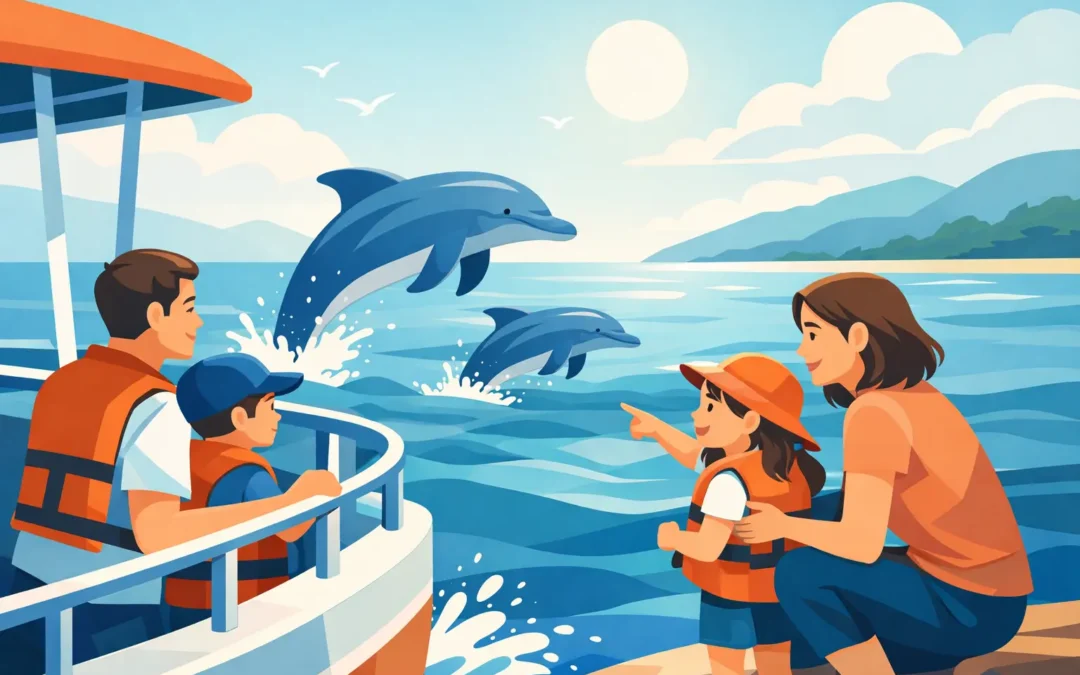
The moment dolphins surface alongside the boat, even the most snack-focused toddler tends to stop mid-bite. A dolphin safari with young children can become one of those rare family holiday memories everyone talks about long after the Algarve tan has faded – provided the trip suits your child, the sea conditions and your family’s pace.
From Vilamoura Marina, the open Atlantic, dramatic cliffs and hidden sea caves are within easy reach. That makes a dolphin-watching trip an exciting choice for families who want more than another afternoon by the pool, without committing to a full day out. The key is choosing a well-run experience and arriving prepared for a real adventure at sea.
What makes a dolphin safari good for young children?
Wild dolphins do not follow a timetable, and that is part of what makes an encounter so special. Children are not watching an attraction through glass. They are seeing animals in their natural environment, moving through the water at speed, playing in the wake or surfacing in small groups beside the boat.
For younger children, the best trips balance that excitement with comfort. A modern boat with individual seating gives families a more secure, settled base than a crowded vessel where everyone is standing or squeezing together. Smaller groups also make it easier for children to see, hear the crew and ask questions without feeling overwhelmed.
An experienced local skipper matters just as much. Conditions can change quickly along the Algarve coast, and a professional, licensed crew knows how to select a suitable route, approach wildlife respectfully and keep the journey enjoyable rather than overly bumpy. At Algarve Cave Tours, family-friendly sightseeing is built around knowledgeable crews, comfortable boats and clear safety procedures from the marina onwards.
That said, the right age is not the same for every child. A confident four-year-old who loves boats may have a brilliant time, while an older child who is anxious around movement may find the open water challenging. Think about your child’s temperament rather than simply their age.
Choosing a dolphin safari with young children
A tour that combines dolphin watching with the Benagil coastline can be a particularly good fit for families. It creates plenty of visual variety: bright fishing boats leaving the marina, golden cliffs, beaches only accessible by sea, rock formations and the world-famous Benagil Cave. If dolphins take time to find, there is still a breathtaking coastal journey unfolding around you.
Trip length is worth considering carefully. A shorter outing may be easier for very young children, especially if they are near nap time or have not been on a boat before. A longer safari and cave experience offers more time on the water and more scenery, but it asks more of little legs, little stomachs and little attention spans.
Check the practical details before booking. Families should understand where the boat departs, how early they need to arrive, whether there is allocated or individual seating, and what the operator recommends for children. Vilamoura Marina is a convenient departure point, with a straightforward meeting location and the holiday atmosphere already built in.
The weather forecast is only one part of the picture. A sunny day can still bring a choppy sea, while a cooler morning may be wonderfully calm. A responsible operator will assess conditions on the day and will not run a trip when the sea is unsuitable. Flexibility is a reassuring sign, not an inconvenience.
Prepare for the boat, not just the sunshine
Families often pack for the beach and forget that the temperature can feel different once the boat picks up speed. Sea spray, wind and shade can arrive quickly, even on a hot Algarve afternoon. Dress children in light layers, with a secure hat where practical, and bring a light jacket they can put on without fuss.
For a smoother trip, keep your preparation simple:
- Apply high-factor, water-resistant sun cream before leaving for the marina.
- Bring water and a small, familiar snack for after the trip or when permitted onboard.
- Pack a light layer, sunglasses and a hat with a strap if your child will wear one.
- Take any child-appropriate motion sickness treatment only after seeking advice from a pharmacist or healthcare professional.
Avoid a large, heavy meal immediately before departure. A light meal is usually kinder to small tummies, particularly if the sea is lively. If your child has experienced travel sickness in cars, coaches or rides, do not assume a boat trip will be the same – but do plan for the possibility.
It also helps to explain the experience in honest, exciting terms. Tell children they will need to sit down when the crew asks, that the boat may bounce a little and that dolphins are wild, so nobody can promise exactly when they will appear. This turns uncertainty into part of the adventure rather than a disappointment.
Safety first, without taking the fun out of it
Life jackets and safety briefings are not the boring bit before the holiday fun starts. For young children, they are what allow parents to relax enough to enjoy the moment. Listen closely to the crew, make sure any safety equipment fits correctly and keep children beside you during boarding and disembarkation.
Once underway, choose seats that give your child a clear view but allow them to feel supported. Many children are happiest sitting close to a parent, facing forward and knowing exactly where they should stay. If the crew asks passengers to remain seated, treat it as a firm rule rather than a negotiation.
Parents should also manage expectations around photography. Trying to film every splash while holding onto a child can make the experience less safe and less enjoyable. Take a few photographs when the boat is steady, then put the phone away. Your child’s wide-eyed reaction is usually the better souvenir.
Good wildlife watching is calm and respectful. Skippers should never chase dolphins or crowd them. The most memorable encounters happen when dolphins choose to swim nearby, often appearing unexpectedly in the boat’s wake. That approach protects the animals and gives children an early lesson in appreciating nature without disturbing it.
How to keep little ones engaged on the water
The best entertainment is often already in front of them. Ask simple questions as the coast passes by: can they spot a cave opening, count the boats in the marina or look for different shades of blue? Point out the cliff colours and the way the rock has been shaped by the sea. A good crew’s commentary can bring these details to life without turning the trip into a classroom lesson.
If dolphins appear, keep your voice calm and let children watch. Shouting with excitement is understandable, but quiet observation often means they notice more: the curve of a fin, the flash of a body beneath the surface, or several dolphins surfacing together.
For toddlers, a favourite small toy or comfort item can help during the outward journey. Choose something easy to hold and not precious enough to cause a family crisis if it gets wet. Older children may enjoy being given a simple mission, such as looking for the first dolphin fin or choosing their favourite cave.
When a dolphin safari may not be the best choice
There is no prize for taking a child on a boat trip before they are ready. If your little one is unwell, exhausted after a late night, terrified of boats or having a difficult day, a beach morning and an ice cream may be the wiser choice. The Algarve will still be there tomorrow.
Similarly, families with babies or children who need frequent toilet breaks, feeding stops or a very predictable routine should check whether a particular tour duration works for them. Private charters can offer greater flexibility for multigenerational groups or families wanting a more tailored pace, though a shared trip is often a fantastic, sociable option for children who enjoy new experiences.
A dolphin safari with young children is not about ticking off an attraction. It is about sitting together on the water, scanning the horizon and waiting for something extraordinary to happen. Give your family the right boat, the right conditions and a little room for wonder, and the Algarve coastline can do the rest.