
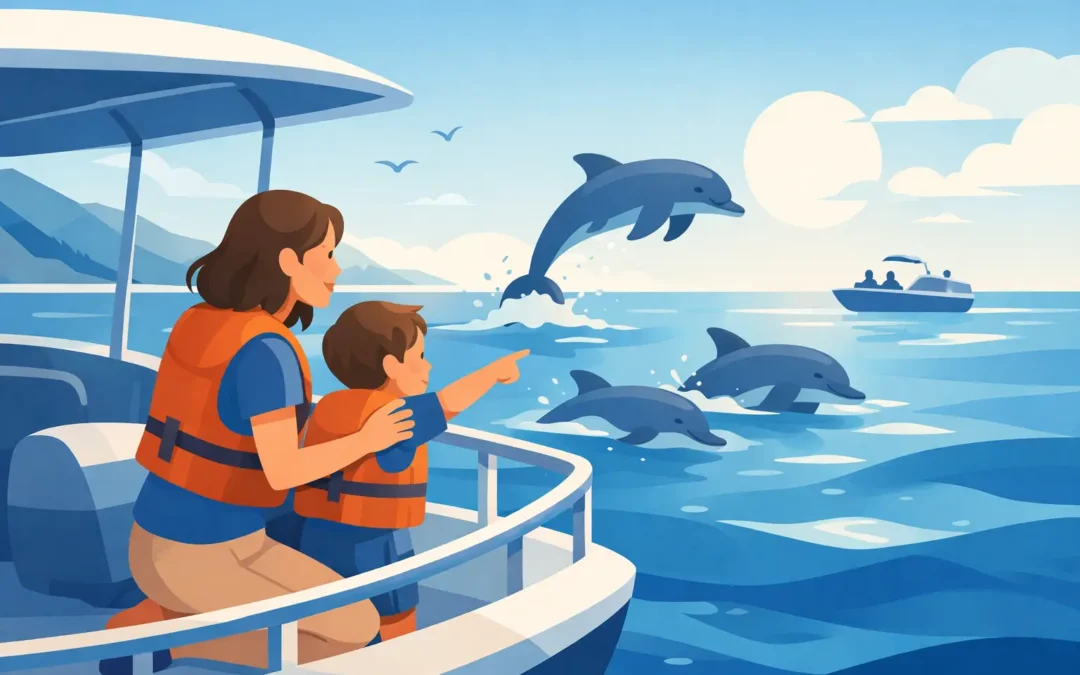
One minute your child is scanning the horizon for fins, the next they are shouting with pure holiday joy as dolphins surface beside the boat. It is exactly the sort of Algarve memory families hope for, which is why so many parents ask the same sensible question: is dolphin watching safe for children? The short answer is yes, it can be very safe when you choose the right operator, the right conditions, and a trip that suits your child’s age, confidence and comfort on the water.
Is dolphin watching safe for children on a boat trip?
In most cases, yes. A professionally operated dolphin watching tour is designed to be a family-friendly experience, not an extreme activity. That matters. There is a big difference between a licensed sightseeing operator running modern boats with experienced skippers and a trip that feels rushed, overcrowded or poorly managed.
For families, safety starts long before the boat leaves the marina. It begins with proper licensing, clear boarding procedures, lifejackets, weather checks and a crew that knows how to balance excitement with caution. Children do not need a stripped-back experience to stay safe, but they do need a well-run one.
The other part of the answer is more personal. A calm, sea-loving ten-year-old will usually experience a dolphin trip very differently from a nervous toddler who has never been on a boat. So while dolphin watching is generally safe for children, the right question is often whether it is the right trip for your child.
What actually makes a dolphin watching trip safe?
The biggest factor is the operator. Families should look for a company with licensed local skippers, a clear safety briefing and boats designed for sightseeing comfort rather than packing in as many passengers as possible. Individual seating, sensible group sizes and a crew that gives clear instructions all make a real difference when you are travelling with children.
Sea conditions matter just as much. Even the best boat and crew cannot turn a choppy day into a smooth one. Responsible operators pay close attention to weather and ocean conditions and may amend or postpone trips if the sea is not suitable. That is not inconvenience for the sake of it. It is exactly what good marine safety looks like.
Then there is the pace of the tour itself. Dolphin watching involves travelling offshore to search for wildlife, which can mean periods of faster navigation depending on conditions and the location of sightings. On a quality trip, that pace is handled carefully and professionally. Skippers adjust to the sea state, brief passengers properly and approach sightings in a controlled, wildlife-respectful way.
The age question parents really want answered
There is no universal age that suits every child, and that is where a bit of honesty helps. Some children are ready for a dolphin watching boat trip from a young age, particularly if the sea is calm and the boat is comfortable. Others may be better waiting until they are old enough to enjoy the experience without becoming tired, cold or unsettled.
Babies and very young toddlers are the trickiest group. It is not because dolphin watching is inherently unsafe, but because small children can struggle with wind, motion, noise and the unpredictability of being at sea. They also cannot always tell you clearly when they feel uncomfortable. For many families, preschool age and up is the point where the trip becomes easier and more enjoyable for everyone.
School-age children are often the sweet spot. They are old enough to follow instructions, wear safety gear properly and take in the excitement of spotting dolphins in the wild. They also tend to love the sense of adventure – the open sea, the dramatic coastline and the moment when the first dorsal fin appears.
If you are unsure, it is always worth thinking less about the number on your child’s birthday card and more about temperament. Do they cope well with boats? Are they easily overwhelmed by noise or movement? Can they sit comfortably for the duration of a tour? Those answers are often more useful than age alone.
Is dolphin watching safe for children who get seasick?
This is where the answer becomes more conditional. Seasickness is not usually dangerous in itself on a short sightseeing trip, but it can quickly turn a wonderful outing into a miserable one for a child. If your son or daughter is prone to motion sickness in cars, coaches or boats, take that seriously.
Morning trips often feel more comfortable when conditions are calmer, though this depends on the day. Light layers help because children can feel chilly at sea even in warm Algarve sunshine. A small snack beforehand is often better than boarding on an empty stomach, but a heavy meal is usually not ideal.
Parents sometimes focus entirely on the chance of seeing dolphins and forget that comfort is part of safety too. A child who is cold, tired or queasy is less likely to listen well, enjoy the ride or feel settled on board. Good preparation changes the whole experience.
Choosing a family-friendly operator matters more than parents think
If you are comparing trips, this is the part to pay closest attention to. A family-friendly dolphin tour should feel organised from the start. You want straightforward check-in, clear meeting instructions, visible professionalism at the marina and crew who are approachable as well as experienced.
Look for signs that the operator is used to welcoming families, not merely tolerating them. That can mean modern boats, comfortable seating, manageable passenger numbers and a style of guiding that keeps the atmosphere exciting without making it chaotic. On Algarve waters, where the scenery is breathtaking and sightings can be genuinely thrilling, that balance is important.
At Algarve Cave Tours, for example, the focus is on delivering an exciting but reassuringly professional experience from Vilamoura Marina, with licensed local skippers, modern boats and a more personal onboard atmosphere. For parents, that combination of adventure and structure is exactly what inspires confidence.
Safety around the dolphins themselves
Parents sometimes worry that dolphin watching means getting into the water or being very close to wild animals. On a boat-based tour, that is not how the experience works. Responsible dolphin watching is about observing dolphins in the wild from the boat, under the guidance of a trained skipper who follows wildlife rules and keeps a respectful distance.
That matters for two reasons. First, it protects the animals and their natural behaviour. Second, it creates a calmer, more controlled experience for passengers. Wild dolphins are wonderful to watch because they are free, unpredictable and completely at home in the open sea. A professional crew understands how to manage that encounter safely and respectfully.
Practical tips for parents before you board
A little planning goes a long way. Dress children in layers, even in summer, because sea breezes can feel cooler than expected. Apply sun cream before departure, bring water and make sure everyone has used the loo before boarding. If your child is sensitive to motion, speak to a pharmacist in advance about suitable remedies.
It also helps to set expectations. Tell younger children that dolphins are wild animals, which means sightings can never be forced or scheduled to the minute. The search is part of the adventure. When children know that they are going on a real wildlife safari rather than a guaranteed theme-park show, they tend to enjoy the whole experience more.
During the trip, listen closely to crew instructions and encourage your children to do the same. Keep hands where they should be, stay seated when asked and avoid moving around unnecessarily while the boat is under way. These are simple points, but they are the habits that keep a family trip smooth and safe.
So, should families book a dolphin watching trip?
For many families visiting the Algarve, absolutely. It is one of those rare holiday experiences that combines genuine excitement with the sort of natural beauty children remember for years. Watching dolphins in the wild against a backdrop of golden cliffs and open Atlantic water feels special because it is special.
The key is choosing well. If your child is old enough to enjoy a boat trip, comfortable on the water and booked with a professional operator that takes safety seriously, dolphin watching is not just safe – it can be one of the most rewarding family outings on the coast.
If you are still weighing it up, trust your read on your child and do not be afraid to ask practical questions before you book. The best family trips are not the most extreme ones. They are the ones where everyone steps off the boat smiling, a little windswept, and already talking about the dolphins they saw.