
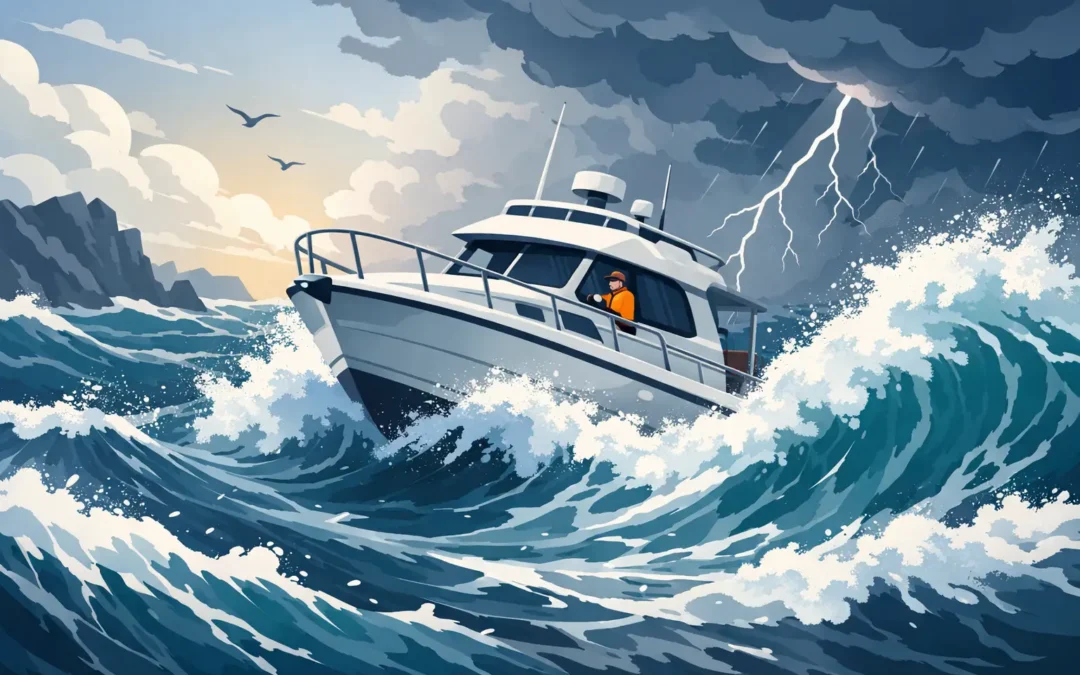
A bright Algarve morning can look perfect from the marina, yet the Atlantic may feel very different once the coastline is behind you. If you are wondering what happens during rough seas, the honest answer is that a professional boat trip does not simply press on and hope for the best. Conditions are assessed continuously, and the skipper adjusts the route, speed or departure plan to put safety and comfort first.
For many visitors, a little movement is part of the adventure. Feeling the boat rise and settle over a rolling swell can make the journey to the world-famous Benagil Cave or a dolphin-watching area feel even more memorable. But there is a clear difference between an energetic ride and sea conditions that are unsuitable for a sightseeing trip.
What happens during rough seas on Algarve boat tours?
Before passengers step aboard, the crew considers far more than whether the sun is shining. Wind strength and direction, wave height, swell period, tides, visibility, local forecasts and the planned route all matter. A northerly breeze can leave some sections of the Algarve coast relatively protected, while a swell arriving from the south or west can create challenging conditions near cave entrances and exposed headlands.
At sea, the skipper monitors how the boat is handling and how conditions are developing. Modern tour boats are designed to operate safely within specific limits, but a responsible skipper will not use every possible limit simply because the vessel can technically manage it. Passenger comfort, the ages and confidence of the group, and the sheltered options available along the coast all help shape the decision.
When the sea becomes choppier than expected, the skipper may reduce speed. This gives the hull more time to meet each wave cleanly and makes the ride more comfortable. They may also alter course, because taking waves at a different angle can significantly reduce spray, pounding and sudden movement.
A route may be shortened, adapted or redirected towards more sheltered water. On a dolphin trip, for example, the crew may search in an area where conditions allow safe wildlife viewing rather than travelling farther offshore. On a coastal excursion, sea caves may be viewed from a safe distance if entering close to an opening would not be appropriate.
Why waves are not the whole story
The forecast often mentions wave height, but this is only one part of the picture. A moderate swell with a long gap between waves can feel smooth and gentle, even when the waves look impressive from shore. Short, steep waves caused by local wind can feel much bumpier, particularly on a faster boat.
Wind direction matters too. An offshore wind may make the water close to shore look calmer while creating a different pattern farther out. An onshore wind can push chop towards the coastline. Tide can affect currents around headlands, harbour entrances and caves, while a low sun or haze can reduce visibility even on a comparatively calm day.
That is why a quick glance at the beach is not a reliable way to judge a marine tour. Licensed local skippers build their understanding from official weather information, local knowledge and real conditions on the water. They know where the Algarve coastline offers protection, which stretches become uncomfortable first, and when the right choice is to wait or not depart at all.
Cave entrances need extra care
Benagil Cave is breathtaking, but it is a natural sea cave rather than an indoor attraction with fixed access. Its entrance is affected by swell, surge and changing water levels. In rough conditions, waves can rebound from the rock walls and become more unpredictable inside or immediately outside the cave.
For that reason, visiting a cave never takes priority over safe boat handling. A skipper may pass by, pause outside for views and photographs, or omit a particular cave entirely. This can be disappointing when it is high on your holiday wish list, but it is also the mark of an operator making the right call rather than taking unnecessary risks for a photo opportunity.
What guests can expect on board
A quality boat crew will explain what is happening in straightforward terms. You may be asked to stay seated, keep both feet planted, hold handrails when moving around and follow instructions promptly. These are normal precautions, not a sign that something has gone wrong.
Individual seating can make a real difference when the water has a bit of motion. It gives each guest a secure place to sit and lets the crew keep the boat balanced. Children should remain with their accompanying adult and be seated as directed. If you are travelling with a baby, have limited mobility, are pregnant or have a condition affected by sudden movement, it is sensible to discuss suitability before booking.
Spray is also more likely in choppy water, especially near the bow. A light waterproof layer is worth bringing, even in the height of summer. Sunglasses with a secure strap, sun cream, a hat that will not blow away and non-slip footwear are practical choices for any coastal trip.
Seasickness is not a reflection of how adventurous you are. It can affect confident travellers and first-time boat guests alike. Avoid a heavy meal immediately before departure, stay hydrated and look towards the horizon rather than reading or staring at a phone. If you know you are prone to motion sickness, speak to a pharmacist before your trip about suitable remedies and take them early enough to work.
When a trip is postponed or cancelled
Sometimes the safest decision happens before the boat leaves Vilamoura Marina. If conditions are forecast to be unsuitable, a tour operator may postpone or cancel a departure. This can include strong winds, large swell, thunderstorms, poor visibility or harbour restrictions.
It is tempting to assume a holiday boat trip should run because guests have limited time in the Algarve. Yet weather-related changes are made precisely because the crew wants your experience to be enjoyable as well as safe. A fast, wet, uncomfortable journey with no safe cave access is not the premium coastal experience anyone has travelled for.
Where availability allows, guests are usually offered an alternative date or another suitable option in line with the booking terms. The best approach is to keep a little flexibility in your holiday schedule, particularly if a Benagil visit is a must-do. Booking earlier in your stay may give you more room to move a trip if the Atlantic decides to put on a wilder show.
Rough seas and dolphin watching
Dolphins live in the open ocean, so sightings can never be guaranteed by any responsible operator. Sea state can affect the search as well. In calmer water, it is easier for crew to spot fins, splashes and movement at a distance. In choppier water, waves can conceal animals between crests and make an offshore search less comfortable.
That does not mean dolphins disappear whenever there is a breeze. Local, experienced crews understand the areas and conditions in which they are most likely to find them, and they will always watch wildlife respectfully. If the sea is too rough for a safe and rewarding search, a skipper may adjust the plan or decide that another day offers the better opportunity.
How to choose the right day for your trip
No one can control the weather, but you can make the most of your plans. For guests who are nervous about boats or especially prone to seasickness, a morning departure is often a good choice, as winds can build later in the day. It is not a guarantee of flat water, but it can be a useful consideration.
Private charters offer greater flexibility around the pace and focus of the outing. Couples may prefer a sheltered scenic route and time for photographs, while families can ask the skipper about the most comfortable conditions for younger passengers. Shared tours are still expertly managed, but the route must work safely for the full group and prevailing conditions.
Most importantly, choose an established operator with licensed skippers, well-maintained boats and clear safety procedures. At Algarve Cave Tours, the crew’s local experience from Vilamoura helps turn changing conditions into well-managed decisions, whether that means finding calmer water, adjusting the coastal route or recommending another departure.
The Algarve is at its most spectacular when the sea has a little energy – sunlight flashing on the water, cliffs rising beyond the spray and the thrill of travelling along a coastline made by the Atlantic itself. Trust the crew, dress for the conditions and leave a little room in your plans for nature to set the pace. That is how a day on the water stays exciting for all the right reasons.